Monday, 2 May 2016

SOHE - RECONCILIATION AT MUMUNE VILLAGE

RECONCILIATION AT MUMUNE
Wednesday 09th March 2016
Higaturu LLG, Ward 15  - Mumune Village

Minister & Member for Sohe being welcome by village elders
Services delivery in rural areas in our country is very daunting task faced by leaders due to rugged terrains, weather and most often the recipient of the services lack the understanding of the purposes of development.

As such, the people of Munune village in Ward 17 of Higaturu LLG in the Sohe District have taken the initiative to welcome their local MP, Hon. Delilah Gore also the Minister for Religion, Youth & Community Development to be part of a reconciliation ceremony to mark a new partnership in which political differences before and after elections have denied the people their rights to basic services which the Member has being tirelessly administering through other wards.
Oro traditional gift (podo) for the guests

“It’s not easy to put roads up in rural areas because locals demand compensation every now and then. Even though it’s the people’s right to claim compensation due to the destruction of natural resources and cash crops. But upgrading an existing road and being mocked at and given compensation claims just does not justify the situation. It only delays progress. So we need to change our attitudes. Blaming the governments all the time is a wrong mindset. The government is trying but it is you, the people who have to embrace development and change” said the Minister.

The O’Neill Dion government is focused on rural development by bestowing the powers to the District Administrations as the development authority to administer to its people and funds can be accessible without further delays. 

Beautiful Oro girls in their traditional attires to welcome Minister Gore 
But the onus is on the people to utilize such policies by working closely with the government to allow roads, bridges, schools and health service to be provided for the people.

“We must forget our difference and work together for the betterment of our future generations. Our children do not deserve be suffer due our indifference and politics” 

Minister Gore was overwhelmed by the reception and commended the ward and village leaders for the efforts in organizing the event. She further reiterated that she won’t be making any commitments as such because politicians have the tendencies to make promises but when the political climate changes, these commitments are forgotten and causes confusions among us.

SOHE - TARA PURI ROAD BREAKING CEREMONY

SOHE - TARA PURI ROAD BREAKING CEREMONY
Tuesday 08th March 2016
Higaturu LLG, Sohe District, Popondetta Oro Northern Province

Northern Province has been ravaged with natural disasters over the past few years which has affected many roads and bridge infrastructures in the province. And early this year, the province faced another of these disasters which destroyed more than seven bridges.
Girua bridge under construction through PNG Australia TSSP 
The O’Neill Dion government has responded through the Department of Works by sending experts to collect data to remedy the problem and AusAid through their Transport Sector Support Program (TSSP) have invested K139 million as a joint partnership to ensure that the damaged bridges are rehabilitated.
Meanwhile, the Open member for Sohe district and Minister for Religion, Youth & Community Development, Hon. Delilah P Gore went her own way with her DDA team to put up roads to assist her people in her district during their time of distress.

After rehabilitating the Sasembata, Awala and Kendata road the in past two years the Tara-Puri road was recently declared open and ready for rehabilitation after intense negotiations with the land owners.

Tari-Puri road was a daunting task for the member since it took almost one and a half year to get the road rehabilitated due to weather conditions, compensation claims and political enmities.
Felling of rubber trees to cater for the road construction
“It will take almost 2-3 months to have the 10 Km Tara to Puri roads renewed with an estimated costing of K1.1 million. And due to budget constraints, the SDDA has assigned only K500, 000.00 which is from the carried on budget from the previous year that has now been used for clearance and grudging only. The balance will be allocated during the upcoming DDA meetings,” said the Minister during her speech at the opening.

Almost K200, 000.00 was paid as compensation to the land owners due to the loss of cash crop like rubber and betel-nuts and other garden produces. The Department of Primary Industries scoped and valued the cash crops and the Value General certified the payment through SDDA.
Minister Delilah Gore and the DDA executives addressing the media during the opening

Now the people of Tara and Puri will have access to basic services and their cash crops can be sold for what it is worth. Thanks to their mother and mandated leader, Hon. Delilah Gore’s vision and the people of Tara –Puri for their consent in helping them help themselves.

Sunday, 7 February 2016

CONGRATULATIONS HON. DAVID ARORE!


Hon. David Arore addressing the media at the state function room (Parliament House). Pic by JVS

David Arore, the undisputed leader of the Afore constituency in Ijivitari Electorate in Northern province has proven to the critics and election petitioners that he is still the mandate leader of the Ijivitari district.
David has been a firebrand and radical politician since he entered politics in 2007 and like many other politicians, critics had their way of branding him but he stood tall and fought his way back to his rightful seat.  
Within PNG political circle, David is known for is elusive lobbying tactics and sought by many senior politicians who don't have the guts to change the political climates.

At times even his inputs have costs his image job but his voters have never given up on him....yet!

"CONGRATULATIUONS HON. DAVID ARORE, MP"

Congratulations from the Member for Sohe District and the Ministre for Relioguon. Youth & Community Development - Hon. Delilah Gore, MP.

Thursday, 28 January 2016

SOHE - Delilah Gore Still Enduring


Northern Province witnessed and announced the victory of Ms Delilah Gore as the Member for Sohe District from the 2012 National General Elections after landslide victory. Most of us know little about Papua New Guinea's fifth ever female MP, 

Delilah Gore, the first woman to be elected in the 2012 elections. She polled 6105 to runner up Henry Amuli's 4112 votes.

Popondettas around the country were proud recipients of their first female political leader. It was the most jubilant victory for the people of Oro and Papua New Guinea. The people of Sohe have chosen a female political leader to lead them and to bring about a different approach in service delivery through eyes of a mother. Women have always been behind the scene and Orokaivans did not have any hesitation in casting their vote in declaring their very own Sohe Butterfly! 

They were never wrong! Hon. Delilah Gore had the qualities, local knowledge and heart of a mother who was able to lead her people.

Even though, politics in Papua New Guinea is dominated by the men folk. The O’Neil/ Dion government through the global approaches in empowering women participation in a country’s development have been honored to have her on board to balance out gender issues in the politic arena. Although Ms Gore still maintains that women must earn their place at the Parliament house. She still emphasizes that; “Women must compete with the man during national elections by sweating through the thick and thin of election campaign struggles and not to devise easy routes to get in. Because an easy way in, is an easier way out. And it will lack the patriotic essence of a genuine leader. We must not over look our cultural barriers where women are the lesser class, we must face them to prove our strengthens, values and worth in providing an alternative leadership.”

Politicians are like a celebrities and his or her life are closely monitored by the public. The common perception of politicians through the public eye is either respectful, envious, jealousy or curiosity. Either of these perceptions can cause a desirable and non-desirable outcome depending on the timing, situation, location, etc.

Moreover, human beings have the tendency to recall and make known the little defects of a fellow human rather than the good deeds he or she had done. That is pure ignorance and can be even worse when the media grabs hold of it and blows it up to put a price tag. In the media world most bad news grabs a lot of attentions and it sells too! That is even worse for public figures like politicians.

Delilah Gore and Julie Soso being received by joyous  & cheerful  crowd
at the Jackson’s airport after their victories after  the 2012 general elections.
But the Honorable member for Sohe electorate has nothing serious to worry about as she was already performing to high standards since the last elections through her practical approaches and achievements which will be highlighted.

Oro Kaivas should be proud that their daughter has been delivering and endured the wrath of political life the past three (3) years but still maintains her composer. She has inspired women nationwide and proven critics wrong through her sensible approaches in problem solving and services delivery. Most of her male colleagues are very supportive of her feminine touch and presence in the political arena.

Even though politics has given our three female (3) MPs such trying times. They are still enduring and the Sohe Butterfly is very determine to deliver her visions for her district and cannot wait to get a dubious political power play which has been clouding and disturbing her ministry and district’s plans for quite a while.

The people of Sohe district and Popondetta as a whole can be rest assured that things will be back track and should not be worried as their MP as achieved a lot for them and the country.


Below are some her achievements at district level after been mandated has a political leader and within a duration of 3 years. Some of these projects are  completed and others still ongoing.
..................................................................................................................................................
 
INFRASTRUCTURES
 
Existing roads rehabilitation-Sasembata, Sairope, Boru/ Evasusu, Dikowari and Tibeki/ Barevoturu- Ongoing
 
New Roads-Tara to Puri and Kanga to Asimba-Ongoing
Existing Bridges Rehabilitation and New Bridge- Sohe District - Ongoing


HEALTH
 
Ambulances – Kokoda and Sangara Health Centers - Completed
Water Ambulances (Dinghy) - Ioma - Completed
\id-posts / Health Center Maintenance and New  Staff Housing- Ilimo, Sangara and Manau Health Centers - Ongoing
New Aid Post/Health Centre - Sasembata, Mangure and Kira Government Station - Ongoing
 
EDUCATION
 
International scholarships- Lincoln University - Ongoing
Domestic Scholarship-UPNG,DWI,UOG,PAU, Balop & Madang
Teachers Colleges’, St. Margret’s Nursing College, CTC (Madang, Lae & Popondetta
Skills Training), ITI, IBS, Sonoma & Newton Theological Colleges, PNGIA, and UNRE (Popondetta Campus) - Ongoing
 
Teachers’ In-servicing Meetings Facilitation-Sohe District as whole - Completed
New Teachers Housing-Dapari Primary Schoo l- Completed
Desktop Computers & Library Books Donation and Funding - Martys Secondary School,
Kokoda Skills Training Center,  Ajeka, Kokoda, Sasembata and Bare Primary Schools Completed
 
School Dental Clinic-Higaturu and Kokoda LLG Primary Schools - Ongoing
School Infrastructure Support – Sangara Vcational School - Completed
Institutional Support – UNRE (Popondetta Campus) - Completed
 
LAW & JUSTICE
 
Police Vehicles-Sangara and Kokoda - Completed
Police Station and Staff Housing Maintenance-Sangara - Completed
Court House Maintenance – Kokoda - Ongoing
Recruitment-Police College - Completed
Outstanding Allowances (2011)-MS4 - Completed
Training (Youth Self-Management) Program- Sohe District as a whole - Ongoing
 
ECONOMIC DEVELOPMENT
 
Sohe District Credit Scheme (SDCS) establishment-Sohe  District - Completed
Women in Agriculture (Horticulture & Flori-culture) Show - Completed
Oil Palm Growers Mill Counter Funding-Sohe District - Completed
 
 
COMMUNITY DEVELOPMENT, YOUTHS, SPORTS & CHURCHES
 
St. Pauls Anglican Church Funding-Tembeki - Completed
Tembeki SDA Church Funding-Tembeki - Completed
Hohorita Eruption Day Funding – Hohorita - Completed
Sui (Oro OISCA) Agricultural Training Facilitation-Sui - Completed
Kokoda SDA Church Funding-Kokoda - Completed
Popondetta SDA Church Funding-Popondetta - Completed 
Popondetta Anglicare Funding-Popondetta - Completed
LLG Support Funding-Higaturu, Kokoda, Tamata, and Kira-Sohe district - Completed
Waseta Youth Hall-Waseta - Ongoing
Independence Celebrations – Kokoda - Completed
 
EMERGENCY & DISASTER
 
Transport Funding- Helicopter & Dinghy - Completed
Relief Supplies Funding and Purchasing-Food, Utensils, Water, Clothing etc - Ongoing
Duty allowances, Benefits-Emergency & District Officers and stakeholders - Completed
 
These are a few of her achievement during the first three (3) years of her rein but the honorable Member is committed to her five year development plan for her district will continue to complete most of projects. Truly a God knows a mother heart better.

Through her commitment and dedication she was granted to two (2) ministerial portfolios prior to her vice ministerial portfolio after the polls which required her to perform at the national level which required more of her time but she still endured it all and is currently the only female minister in the cabinet.

Sunday, 11 October 2015

OROKAIVAS OF POPONDETTA

 
Orokaiva - Orientation
www.everyculture.com/Oceania/ Orokaiva-Orientation.


Identification. "Orokaiva" is the name for a number of culturally similar tribes in Papua New Guinea who speak mutually intelligible dialects. Although the tribes did not have an inclusive name for themselves until "Orokaiva" was introduced by Westerners, they generally distinguished among themselves as the river people (umo-ke ), saltwater people (eva'embo ), and inland people (periho).

Location. The Orokaiva reside in the Oro Province of Papua New Guinea and are concentrated in the Popondetta district in an area reaching from the coast at Buna Island to the northern slopes of Mount Lamington and in the regions to the north of this general line. This area is a humid tropical lowland, and uniformly high temperatures and rainfall provide a year-round growing season. The wet season, from December to March, is characterized by northeasterly or Northwesterly winds, high temperatures and humidity, and late-afternoon thunderstorms, while the dry season, from May to October, produces northeasterly winds, lower temperatures, less cloud cover, and less-predictable rainfall.

Demography. The indigenous population of the Popondetta district totals some 36,500, of whom 26,500 are Orokaiva in the central lowland area. The number of Orokaiva at the time of Western contact is not known.


Linguistic Affiliation. Orokaiva is classified in the Binandere (or Binandele) Family of eight languages spoken in most of the more densely populated parts of Oro Province. Orokaiva is spoken by about half of the population in the Orokaiva-Binandere area. Dialect divisions within the Orokaiva language area are minor; the boundaries of the area coincide with those of the region administered by the Higaturu Local Government Council, which covers the Saiho and most of the Sohe-Popondetta census divisions. While there are considerable vocabulary differences between the Binandere Languages, there is a close resemblance in grammar and enough similarity in vocabulary to make a limited degree of communication possible.

History and Cultural Relations

In response to Australian pressure, the British government annexed Papua in 1888. Gold was discovered shortly thereafter, resulting in a major movement of prospectors and miners to what was then the Northern District. Relations with the Papuans were bad from the start, and there were numerous killings on both sides.

Village elders often take lead in showcasing special events
The Protectorate of British New Guinea became Australian territory by the passing of the Papua Act of 1905 by the Commonwealth Government of Australia. The new administration adopted a policy of Peaceful penetration, and many measures of social and economic national development were introduced. Local control was in the hands of village constables, paid servants of the Crown. Chosen by European officers, they were intermediaries Between the government and the people. In 1951 an eruption occurred on Mount Lamington, completely devastating a large part of the area occupied by the Orokaiva. Survivors were provided with food, medicine, and other relief by the government and were maintained in evacuation camps. Large-scale, expertly planned social, economic, and political development began in Papua around 1960 with the introduction of cash crops, agricultural extension work, land title improvement, road improvement, and educational development.

Settlements


Small villages with populations not exceeding 720 are the typical units of settlement, with houses dispersed in a more or less rectangular form around a central earth or grass "square." Villages are in flat clearings where the grass is scrupulously cut and kept free of rubbish. Houses are built by the men, each house normally being occupied by one nuclear
Typical traditional houses in popondetta
family. Bachelors' houses, of the same size and construction, are also built.

Economy

Subsistence and Commercial Activities. The household is the basic unit of production and consumption, with swidden horticulture as the subsistence base. The main crop is taro, which occupies about 90 percent of the cultivated land. A variety of other plants are grown as well, including bananas, sugarcane, edible pitpit, and a few introduced cultigens such as pineapples, tomatoes, beans, and sweet potatoes. Although the Orokaiva traditionally tended coconut, sago, betel-nut, and a few other varieties of trees in gardens, Villages, and in the bush, their arboriculture was rudimentary in comparison to their precise and detailed attention to tubers, especially taro. In response to Australian pressure during the colonial period, rubber, coffee, and coconut palms for copra have been planted, providing the Orokaiva with a reliable and substantial cash income in recent years. A good deal of plant and animal food is obtained by foraging, especially in the tropical rain forest that covers most of the Northern District. Foraged animal foods include grubs, frogs, snails, rats, and bush eggs. Foraged plant foods are valued during the dry season, when roots, leaves, and fern fronds make up part of a meal. Fish are an important resource, being used not only for consumption but for trade. Hunting is less important; the usual quarry consists of small marsupials, birds, and pigs. Pigs, dogs, and fowl have been domesticated and each man has one or more small dogs that he uses for hunting but that are ultimately destined for the pot. Fowl are a useful source of meat, eggs, and feathers for decoration on headdresses, spears, etc.


Industrial Arts. Items produced include rafts and canoes, pottery, bark cloth (tapa) from the paper mulberry, mats and baskets of coconut and pandanus leaves, wooden bowls, various musical instruments, and weapons.
Tapa cloth is the provincial artefact (mascot) of the province
Trade. Intertribal trade was mainly in animal products, betel-nut products, feathers, and certain artifacts known to be of high quality in particular districts. Although small in volume, trade was politically important in providing a motive for terminating warlike disputes.

Division of Labor. Cooperation among men is common during hunting and house-building. Cooperation of a total village is rare, but there are cooperative hunting and fishing expeditions. There is also a sharp sexual division of labor. Men hunt; prepare tools and equipment; make sago; plant all crops, both traditional (taro, yams, sweet potatoes) and introduced (rubber, coffee); maintain the yams and rubber; harvest rubber; and market coffee. Women cook, care for the sick, maintain the taro and sweet potatoes, harvest taro, and market root crops. Men and women both fish, build fences, collect firewood, maintain and harvest the coffee crop, and market rubber.

Land Tenure. Various land rights may be given to the clan branch, the lineage, or an individual, the relative significance of each varying with the locality and population density. More than one descent group may have rights in a single piece of land. In many instances, the clan branch functions as a reference group, with all land being associated with it. However, it may also function as a primary right-holding group for those hunting areas distinct from current garden land, Typically the grasslands. Primary rights to garden land are normally vested in the lineage. Nevertheless, all such land is ultimately identifiable with individuals who may distribute land (and property) prior to their death not only to their immediate family but also to more distant kin. Traditional tree crops are not planted in stands or groups like cash-crop trees but are widely scattered and are as likely to be planted on patrimonial land as on the land of affines or matrilateral kin. Inheritance of rights to trees usually does not bring rights to the land on which they stand.

Kinship

Kin Groupe and Descent. Every Orokaiva is recruited by birth into the clan of his or her father. All members of a clan claim, but cannot necessarily trace, common descent from a usually eponymous ancestor. Each clan is subdivided into named subgroups or lineages that trace their origin to a named ancestor.

Kinship Terminology. Kinship terminology is of the Iroquois type.

Marriage and Family

Marriage. Polygyny among the Orokaiva is accepted but very rare these days. Clan exogamy is preferred, but not strictly enforced. Villages are not exogamous. A large bride-price is required for arranged marriages, although in the past wives were also obtained through capture. Postmarital residence is ideally patrilocal, but in practice people have a wide choice between the villages of patrilateral or matrilateral kin or of affines, and residence may be changed at any time. The distribution of clan branches through a number of villages is closely related to access to the group's land, hence the initial motivation for a long-term change in residence may be influenced by proximity to land intended to be brought into cultivation. Divorce is allowed, with custody of minor children going to the father, except for infants.

Domestic Unit. The basic domestic and economic unit is the household, composed of either a nuclear or extended family.

Inheritance. Inheritance is usually patrilineal.

Socialization. Errant children are subject to discipline and especially to scolding. Education is predominantly through a system of mission schools, partly financed by the government's department of education.  But the current government's policies on free education will greatly enhance the capabilities of the human resourcing in the province.

Sociopolitical Organization

Social Organization. The social system is characterized by flexibility in arrangements for group membership and for transmission of rights to land. A village normally contains more than one clan branch and consequently is not necessarily a landholding unit. Residents may have closer kinship ties to residents of other villages than
Locals always come with their traditional attires to celebrate important occasions 
with some of their coresidents. Nevertheless, common residence implies some Community of interest and a degree of group solidarity that is reinforced by government policy, which recognizes villages rather than descent groups as functional entities. Marriages between members of different clan branches within the village also reinforce this solidarity, which is expressed in ways such as daily food gifts, cooperation in certain tasks, and joint ceremonial activities. On the average, a lineage comprises three Households. Usually, several clans are represented in a village, with members of a single clan (clan branches) being scattered among a number of neighboring villages. Lineages are more localized in character, frequently being confined to a single village and tending to occupy one section of it.

Political Organization. Political organization incorporates no central authority or hereditary leadership. Instead, it is characterized by big-men (embo dambo) and an ascendancy of
 Current local MP, Hon. Delilah Gore acknowledging her people at Sohe
elders who have proved themselves equal to the task. Such men command the respect of the village, based upon observed qualities of generosity, diligence, wealth, ability to make wise decisions, and skill in arranging ceremonial activities. This status confers no sanctioning authority, however. The Orokaiva tribes, around twelve in number, are very loose units politically and recognize no single leader. The largest unit is the tribe, which has a common territory usually demarcated from neighboring tribal territories by a belt of uninhabited land.

Social Control. There are customary restrictions upon feuding within the tribe, which exist in sharp contrast to the standard acceptance and formalization of hostility between tribes. Formerly, official legal penalties, generally violent, were meted out to criminals. Fear of the ancestors and desire to avoid unfavorable public opinion remain the major mechanisms of social control.

Conflict. Prior to European contact, aggression against the members of another tribe took the form of organized, often cannibalistic raids.

Religion and Expressive Culture

Religious Believes. The traditional beliefs of the Orokaiva, though in many respects vague and locally variable, focused primarily on the "spirits of the dead" and their influence on the living. The Orokaiva had no high god. Formerly, they were animists, believing in the existence of souls (asisi ) in Humans, plants, and animals. The taro spirit was of particular importance and was the inspiration and foundation of the Taro Cult. The Orokaiva have been swept recently by a series of new cults, indicative of their religious adaptability in the face of fresh experience. Mission influence is strong in the Northern District. Religious training is provided almost exclusively by the Anglican church, although mission influence has not totally eradicated traditional beliefs, producing an air of mysticism about the resultant religious system. Currently the Seventh Day Adventist Church (SDA) is slowly becoming widespread.


Religious Practitioners. Orokaiva shamans, or "taro men" serve as healers, weather magicians, and sorcerers. But Christianity has now over rode these traditional (pagan) practices and has improved lives through health, education and social harmony.

Ceremonies. Dances are held often, sometimes accompanied by music, singing, and drums. From time to time, bigmen sponsor large redistributive feasts, featuring pig killings and food distribution. Activities associated with the taro cult (the "Kava Keva" cult) are the major ritual activity. The Taro Cult began about 1915 and soon evolved into ritual practices meant to placate the spirits of the dead (sovai ) who control the taro crop. Thus, it is both a fertility cult and a cult of the dead. Taro men lead the ritual which includes choral singing, drumming, feasting, and violent shaking movements.
A traditional welcome dancing display
Arts. The Orokaiva decorate all manner of artifacts with abstract and representational figures. They are especially fond of music and in the past produced wooden drums and pipes, conch and wooden trumpets, and Jew's harps of bamboo.

Medicine. Illness and misfortune are attributed to the spriits of the dead, to the actions of sorcerers, or to natural causes such as an accident or the weather. Since illness is generally seen as caused by a foreign element entering the body, most cures used by curers (those who have sivo, or special power and knowledge) are designed to extract the foreign element. These methods include producing noxious odors, rubbing the affected area, and extracting a foreign object by sucking.

Death and Afterlife. The Orokaiva believe that upon death the human soul is released and becomes a sovai. Initially, the sovai roam the village, but they ultimately depart to special places of the dead, such as rock outcroppings and stagnant pools of water. Sovai often chastise errant kin by bringing upon them misfortune, illness, and even death. Death is appraised with particular realism, although it is still considered to be ultimately the result of supernatural causes.
 

Bibliography
Keesing, Felix M. (1952). "The Papuan Orokaiva vs. Mount Lamington: Cultural Shock and Its Aftermath." Human Organization 11:16-22.
New Guinea Research Unit (1966). Orokaiva Papers. New Guinea Research Bulletin no. 13. Canberra: Australian National University Press. 
Oostermeyer, W. J., and Joanne Gray, eds. (1967). Papuan Entrepreneurs. Canberra: Australian National University, New Guinea Research Unit.
Schwimmer, Erik G. (1973). Exchange in the Social Structure of the Orokaiva. New York: St. Martin's Press.
Schwimmer, Erik G. (1979). "Reciprocity and Structure: A Semiotic Analysis of Some Orokaiva Exchange Data." Man 14:271-285.
 Williams, Francis Edgar (1930). Orokaiva Society. London: Oxford University Press.

Tuesday, 29 September 2015

NORTHERN PROVINCE, POPONDETTA

Oro Province
Location:                           Papua New Guinea
Coordinates:                     8°45′56″S 148°14′05″
ECoordinates:                   8°45′56″S 148°14′05″E
Country:                            Papua New Guinea
Province:                           Northern (Oro) Province
Districts:                            Ijivitari District & Sohe District
Elevation:                          279 ft (85 m)
Time zone:                        AEST (UTC+10)
Main languages:              Orokaiva, Tok Pisin, English

Popondetta, town eastern Papua New Guinea, south-western Pacific Ocean. Popondetta or Oro as widely known is the capital of Northern Province. The town, on a tributary of the Girua River, was an Allied air base during World War II; the airfield is now used for civil aviation. In addition, Popondetta is the focus of a road network 300 miles (500 km) long, extending from the port of Oro Bay to Kokoda, in the Owen Stanley Range of the central highlands. The area produces cocoa, coffee, rubber, and palm oil. There is some tourism centred on the nearby peaks, one of which, volcanic Mount Lamington (20 miles [32 km] to the south), erupted in 1951, killing 3,000 people and destroying the town of Higaturu. Popondetta has a high school, a vocational institute, and an agricultural college. Pop. (2000) 19, 556.


In 1951 the town became the focus of relief efforts after nearby Mount Lamington erupted and Popondetta was destroyed in January, 1951 when the long dormant volcanic Mount Lamington suddenly erupted.


Mt Lamington view from Girua aiport.
At that time, the mountain was totally covered in green jungle forests and the locals were not even aware that it was a volcano. Only a few days after it began to 'burp', the mountain erupted in a massive explosion.

Pyroclastic flows of searing gas and ash flowed down the mountainside at 150-kph, killing everything in it's path up to almost 12-km out. It is believed that between 3000-4000 people were killed by the eruption.

Popondetta is near to Buna on the Northern Papua coast and is not far from the beginning of the Kokoda Trail, made famous during World War II.

This area of New Guinea is home to the endangered Queen Alexandra's Birdwing, the world's largest butterfly.

Goliath bird wing butterfly
Orokaiva

Identification."Orokaiva" is the name for a number of culturally similar tribes in Papua New Guinea who speak mutually intelligible dialects. Although the tribes did not have an inclusive name for themselves until "Orokaiva" was introduced by Westerners, they generally distinguished among themselves as the river people ( umo-ke), saltwater people ( eva'embo), and inland people (periho).

Location.The Orokaiva reside in the Oro Province of Papua New Guinea and are concentrated in the Popondetta district in an area reaching from the coast at Buna Island to the northern slopes of Mount Lamington and in the regions to the north of this general line. This area is a humid tropical lowland, and uniformly high temperatures and rainfall provide a year-round growing season. The wet season, from December to March, is characterized by northeasterly or Northwesterly winds, high temperatures and humidity, and late-afternoon thunderstorms, while the dry season, from May to October, produces northeasterly winds, lower temperatures, less cloud cover, and less-predictable rainfall.

Demography.The indigenous population of the Popondetta district totals some 36,500, of whom 26,500 are Orokaiva in the central lowland area. The number of Orokaiva at the time of Western contact is not known.

Linguistic Affiliation.Orokaiva is classified in the Binandere (or Binandele) Family of eight languages spoken in most of the more densely populated parts of Oro Province. Orokaiva is spoken by about half of the population in the Orokaiva-Binandere area. Dialect divisions within the Orokaiva language area are minor; the boundaries of the area coincide with those of the region administered by the Higaturu Local Government Council, which covers the Saiho and most of the Sohe-Popondetta census divisions. While there are considerable vocabulary differences between the Binandere Languages, there is a close resemblance in grammar and enough similarity in vocabulary to make a limited degree of communication possible.


KOKODA TRACK

Gateway to the famous Kokoda track
The famous Kokoda Trail or Track is a single-file foot thoroughfare that runs 96 kilometers (60 mi) overland – 60 kilometers (37 mi) in a straight line – through the Owen Stanley Range in Papua New Guinea. The track was the location of the 1942 World War II battle between Japanese and Allied – primarily Australian – forces in what was then the Australian territory of Papua.

The track runs from Owens Corner in Central Province, 50 kilometers (31 mi) east of Port Moresby, across rugged and isolated terrain which is only passable on foot, to the village of Kokoda in Oro Province. It reaches a height of 2,190 meters (7,185 ft) as it passes around the peak of Mount Bellamy.The track travels primarily through the land of the Mountain Koiari people.

Hot, humid days with intensely cold nights, torrential rainfall and the risk of endemic tropical diseases such as malaria make it a challenging trek. Hiking the trail normally takes between four and twelve days; the fastest recorded time is 16 hours 34 minutes.

History

The track was first used by European miners in the 1890's to access the Yodda Kokoda goldfields. Between July 1942 and January 1943, a series of battles, afterwards called the Kokoda Track Campaign, were fought between the Japanese and Australian forces. This action was memorialized in the newsreel documentary Kokoda Front Line!, filmed by cameraman Damien Parer, which won Australia's first Academy Award for its director Ken G. Hall in 1942.

The tracking route
After the war, the track fell into disuse and disappeared in many places. John Landy, the long-distance runner, set a record of four days for the crossing using carriers and guides during the 1950's, and in 1964 Angus Henry, the art teacher at Sogeri High School, along with two of his students, John Kadiba and Misty Baloiloi, set a new record which was to stand until after the millennium by completing the journey in three and a quarter days without guides, carriers or any signposts or bridges.

The Kokoda Track Foundation, established in 2003, helps villages along the track with education and healthcare. There is a proposal to turn the track into an Australian heritage destination on a par with ANZAC Cove at Gallipoli. Creation of the heritage area, is in part a response to the issue of an Australian gold mining company wanting to mine on or near the track. As of 2007, the idea was backed by the Australian government and Papua New Guinea's foreign minister.

In November 2007, Australian mining firm Frontier Resources announced plans to divert a section of the track to make way for a copper mine. The plan has the support of the local landowners and the Papua New Guinean government but has been criticized by trekking operators.

The track has been closed numerous times by villagers along the route in response to various grievances. In May 2009, villagers at Kovelo – near Kokoda village – blocked the track after complaints that money collected from trekking fees was not being distributed fairly.

Since 2001, there has been a rapid increase in the number of people walking the track. Six Australian trekkers have died from natural causes while attempting to walk the track. Four of those deaths occurred in 2009, with two in the same week in April and another two 8 days apart in September and October. The deaths have sparked calls for mandatory fitness tests for all walkers before starting.

As popularity for walking the track has increased, there have been calls for more regulation of trek operators with some operators taking as many as 150 walkers in a group. In response the Kokoda Track Authority has announced that from the beginning of 2010, tour operators must have a commercial licence which will "address things such as training requirements and first aid details".

In August 2009, the Kokoda Track was the destination for a group of trekkers that were killed when their light plane, Airlines PNG Flight 4684, crashed en route to Kokoda Station. All 13 people on board, including 9 Australian trekkers, were killed in the crash. As a result, the Australian Government committed $1.8 million to improve safety along the track. Funds would be used to improve the safety of airstrips at Kokoda, Menari, Kagi, Melei, Efogi, and Naduri, villages located along the track. A second radio channel would also be installed to deal with emergencies and maintenance work.

In October 2009, Mr. Don Vale became the oldest Australian (at 83) to successfully complete the Kokoda Track.

In November 2009, Australian paralympian Kurt Fearnley (born without the lower section of his spine completed the track, crawling north to south, in 11 days. A multiple paralympic gold medalist (T54 Marathon in Athens and Beijing), he used customized shin pads and wrist guards. His journey was to raise awareness of men's health issues and was inspired by the story of Corporal John Metson, who crawled the track for three weeks, refusing the assistance of a stretcher on the grounds it would burden his comrades.

There has been much debate in Australia about whether it should be called the "Kokoda Trail" or the "Kokoda Track". The monument at Owers Corner uses both terms: "Track" on one side and "Trail" on the other.

"Kokoda Trail" was gazetted as the official name of the route by the Australian administration of Papua New Guinea in 1972.

The earliest mention of the route in an Australian newspaper may be in The Argus on Wednesday 29 July 1942 in a map when it refers to "the Buna Kokoda-Moresby track".

According to historian Stuart Hawthorne, before World War II, the route was referred to as "the overland mail route" or "the Buna road". He states that "Kokoda Trail" became common because of its use in Australian newspapers during the war, the first known instance being in Sydney's Daily Mirror on 27 October 1942.


An old World War 2 relic outside Girua airport , popondetta 
However, all three terms Kokoda Track, Kokoda Trail and Buna-Kokoda road were commonly used during World War II in Australian newspapers from September 1942.

The diary of the Australian Army's 2/33rd Battalion records the route being officially designated as the "Kokoda Trail" in September 1942. The Australian Army has used "Kokoda Trail" as a battle honour since 1957. The Australian War Memorial (AWM) says  that "trail" is probably of United States origin but has been used in many Australian history books and "appears to be used more widely".

Fuzzy wazzy angel
Despite the historical use of "Trail", "Track" gained dominance in the 1990s, with the Australian Macquarie Dictionary stating that while both versions were in use, Kokoda Track "appears to be the more popular of the two".

The track can be walked from either direction. Some say that from Kokoda to Owens Corner is easier, even though in that direction one must actually climb an extra 550 meters in height.

The track can take anything from 4 days to 12 days to complete, depending on fitness and rest time involved. Locals are renowned for being able to regularly complete it in 3 days. The best time to trek Kokoda is from April to September, during the 'dry' season.

There are a number of guesthouses located along the way, some at villages and others at traditional rest spots. The main villages passed through (from Owers Corner) are Naoro, Menari, Efogi Creek 1 & 2, Kagi or Naduri (if shortcut is taken), Alolo, Isurava, Hoi, Kovolo. Villagers are increasingly taking part in the commercial opportunities created by the growing number of tourists; in October 2006, some were known to be selling cans of soft drink and beer at double the price payable in Port Moresby.
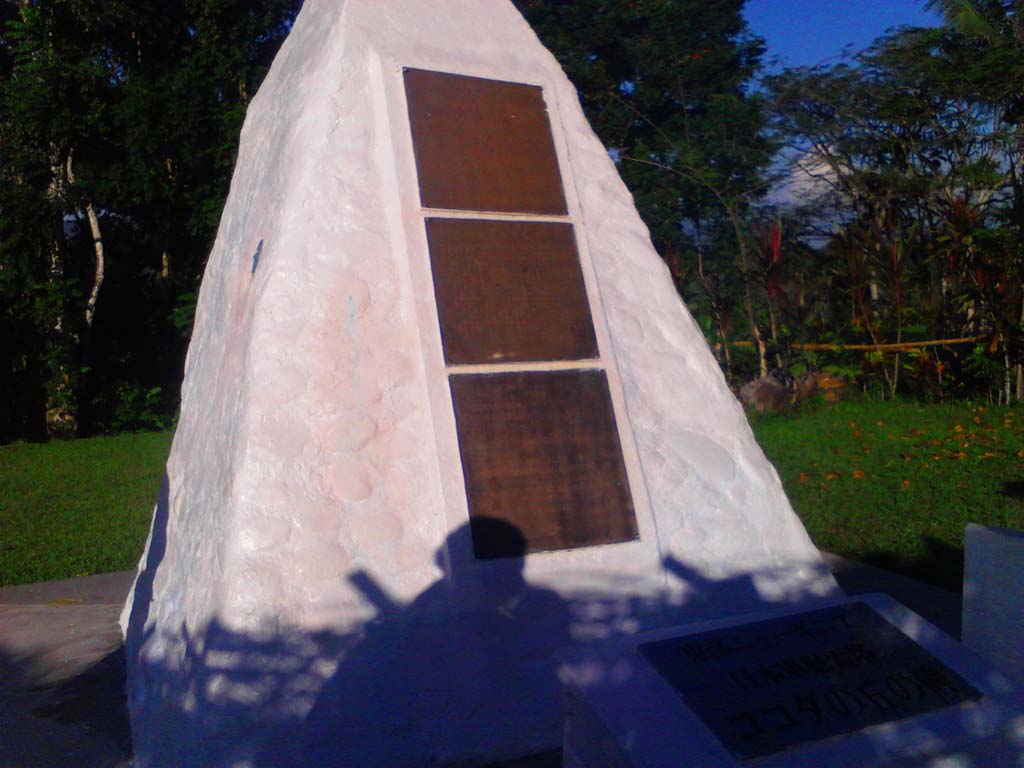
War monuments at Kokoda

Guides and porters can be found more easily at the Kokoda end of the track by asking the local police station for a reputable person.


The Kokoda Track Authority (the PNG Special Purpose Authority with responsibility for managing the Track) requires tour operators to hold a Commercial Operators Licence to lead treks along the Kokoda Track and purchase a trek permit. Licensed operators carry first aid kits, undertake first aid training, carry radios and/or satellite phones, respect the people who live along the Track and ensure their porters and guides are treated in a professional manner. A list of licensed operators is available on its website.

Trekkers walking with unlicensed operators will be stopped by the KTA Rangers and the local people.

https://www.facebook.com/groups/188784697877104/?